
in the media


“Religious property is actually working against our religious objectives,” says priest activist Graham Singh on his plan for repurposed churches

“These are massive, massive increases — well beyond the rate of inflation,” says senior pastor at Montreal’s St. Jax’s Church

After nearly two centuries as a place of worship in downtown London, Ont., the future could bring an additional use for the historic St. Paul's Cathedral: creative sector incubator.
Currently in the early stages, the proposed plan would see the cathedral and lands reimagined as part place of worship, part incubator hub aimed at growing London's creative sector.
Graham Singh of Trinity Centres Foundation joins David Bank from the Global Impact Investing Network’s Impact Forum in Copenhagen to discuss how Trinity is creating financing structures to underwrite the transition of surplus religious properties

With a record number of congregations predicted to close their doors by 2025, multiuse developments may be the future for shrinking congregations and empty buildings.

An estimated 4,000 of Canada’s 12,000 places of worship will close in the next five to ten years, says Graham Singh, Montreal-based founder and CEO of Trinity Centres Foundation (TCF, TrinityCentres.org).

The 2023 London Heritage Awards were handed out Thursday night at Museum London. They’re judged by the Architectural Conservancy Ontario – London region and the Heritage London Foundation. Here are the big winners.

First of all, let's define who faith-based investors are: local church congregations, dioceses or equivalent regional church organisations, national religious pension and savings funds, monastic or religious congregations, as well as faith-motivated individuals and/or family offices.

Struggling with what to do with your church building? Here’s how to find help
Congregations across the country are trying to figure out what to do with buildings that no longer serve their purpose. But there are many resources for leaders grappling with this issue, writes a project director at the Lake Institute on Faith & Giving.

Written collaboratively by members of the Toronto Social Purpose Real Estate Reference Group

Stewarding the physical spaces that God has entrusted to us as the Catholic Church can be daunting! Across the world, there are church leaders realizing that they have more building capacity than they have the staff capacity to maintain; many simply realize that their spaces aren't as effective as they once were.

As church attendance dwindles, heritage buildings sit empty — some falling into disrepair.
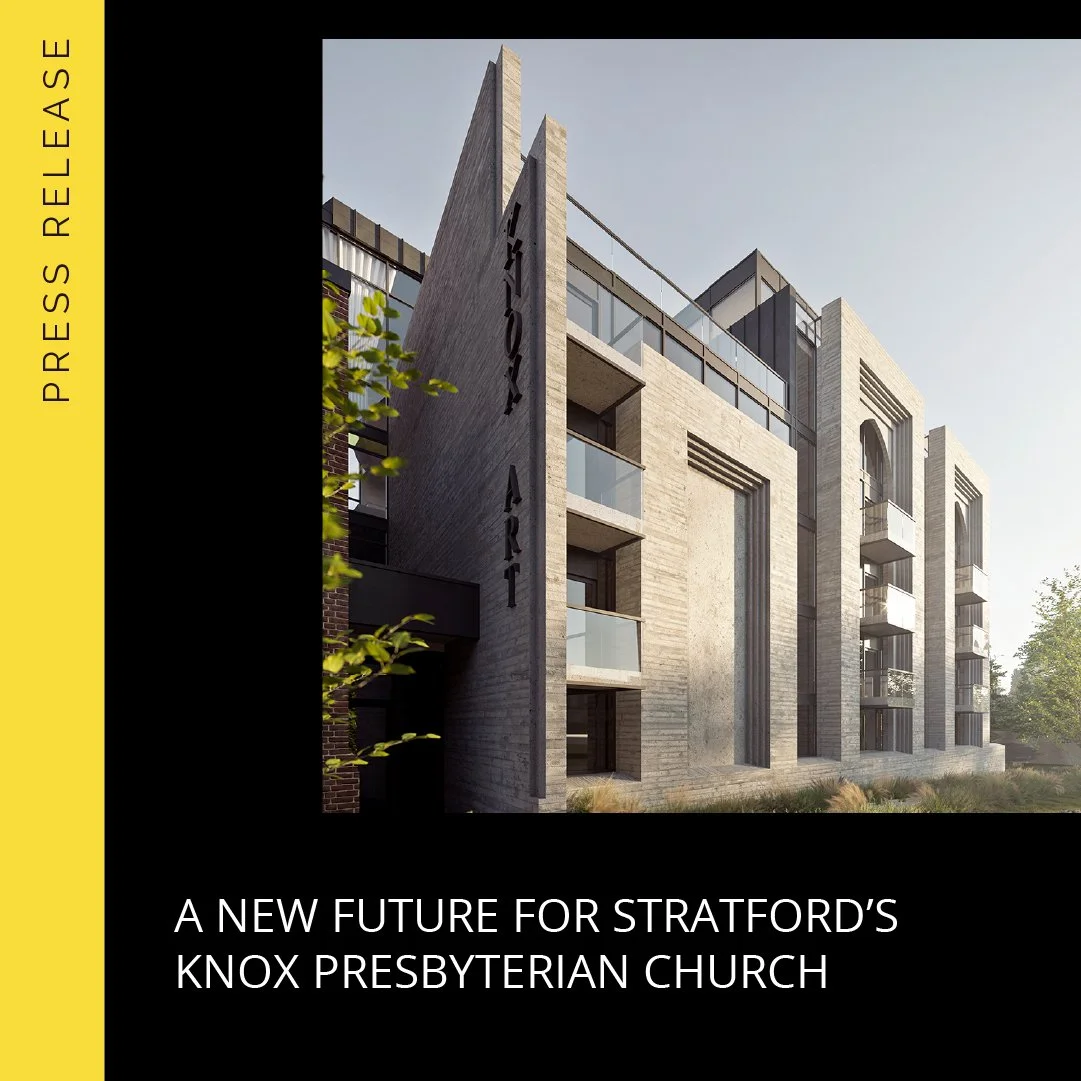
On June 30th, 2022, the BMI Group completed a sale agreement with the congregation of Knox Presbyterian Church and signed separate lease agreements with both the church and the Stratford Arts and Culture Collective (SACC) related to future use of the church property.

Last month, the McDougall United Church in downtown Edmonton got a new lease on life - and a new life for its property.
When, in 2015, it was designated a heritage building for its architectural and cultural significance, the church avoided demolition, but in 2019, it found itself struggling to scrape together the $15-million needed for full restoration.
The congregation eventually settled on a plan to turn the building into a multi-faith space and community hub, with a redevelopment plan that will also include housing. Because of the scope and scale of the proposed project, the church realized they would need to partner with other organizations. To get a helping hand, they turned to the Trinity Centres Foundation, a non-profit that specializes in finding new ways to use faith spaces.

As the world changes, the non-profit and charitable social sector is adapting, and so must philanthropy. Our sector is a fundamental aspect of civil society, but reform is paramount. The status quo is not sufficient. Inequity is rampant in our communities, and there are global challenges we must step up to meet. In our new series, A Vision for the Future, PFC has asked non-profit leaders to share their understandings of where our sector is today, what its role is, and where we need to go.

Across Canada, rural communities are re-imagining lonely church buildings into vibrant community hubs.
It’s more than a massive loss for religious groups. With more than 5,000 churches expected to close in Canada in the coming decade, it’s a huge loss of infrastructure for the community-at-large.
Located in the centres of their communities, churches frequently provide a home for daycares, seniors programming and educational workshops, as well as for community groups and the performing arts. Most have spaces for both large and small gatherings, many have kitchens, and often there is outdoor space too, allowing people to gather together in all sorts of meaningful ways.

Members of the McDougall United Church and the Muslim Association of Canada (MAC) Edmonton Chapter will gather together on Friday, April 15, before their Good Friday service and Friday Prayers, respectively, to exchange goodwill and fellowship in recognition of their new partnership. With support from Trinity Centres Foundation (TCF), the two groups are collaborating to restore and redevelop one of Edmonton’s oldest churches, McDougall United Church, into an inclusive community hub.

On Thursday, March 24 The congregation at Knox Presbyterian Church in Stratford announced a partnership with Urbanistyc, a BMI Group company, that will preserve one of Stratford’s most historic churches. The agreement signed by both the church and developer will allow for continued use of the church by the congregation and future development of the full church site.

Bolder, faster, together poses the question: How can we all take responsibility for the past, navigate a turbulent present and co-operate to protect future generations? Follow along as this series, co-ordinated by the Transition Innovation Group at Community Foundations of Canada, explores the deep societal transformation already underway and accelerating in Canada and around the world.
Our Executive Director, Graham Singh was featured on the 41st episode of the Impact Investing Podcast hosted by David O’Leary!
Graham talks about the crisis facing churches across the country, and our approach to using impact investing as a vehicle for transforming idle church properties into thriving community hubs.

Across Canada, church congregations are dwindling and costs to maintain their buildings continue to rise. As a result, many of Canada's 27,000 faith spaces and buildings across Canada are in danger of closing. But potentially, many of those spaces could be reborn and repurposed as community hubs that everyone could use.
That's where Kendra Fry comes in. Fry has a long background in arts and theatre, including her latest role as the general manager of Stratford Summer Music. But her other job is to help communities of faith reimagine their spaces.

Many churches have inherited valuable real estate from previous generations. Our facilities have served admirably, hosting wedding and funerals, baptism, worship services, and music concerts. They have also served the community through Scouts, AA, day care, fundraising dinners, and so much more. Unfortunately, these buildings often become millstones around the neck of congregations as energy is diverted from mission into roof repairs, work parties for painting, with declining, precious funds sent off for ever-increasing utility bills. As churches struggle with these new realities, accelerated in many cases by COVID-19, they invariably turn to the possibility of sale. In my context alone, we are expected to lose 30% of our church buildings over the next five years.
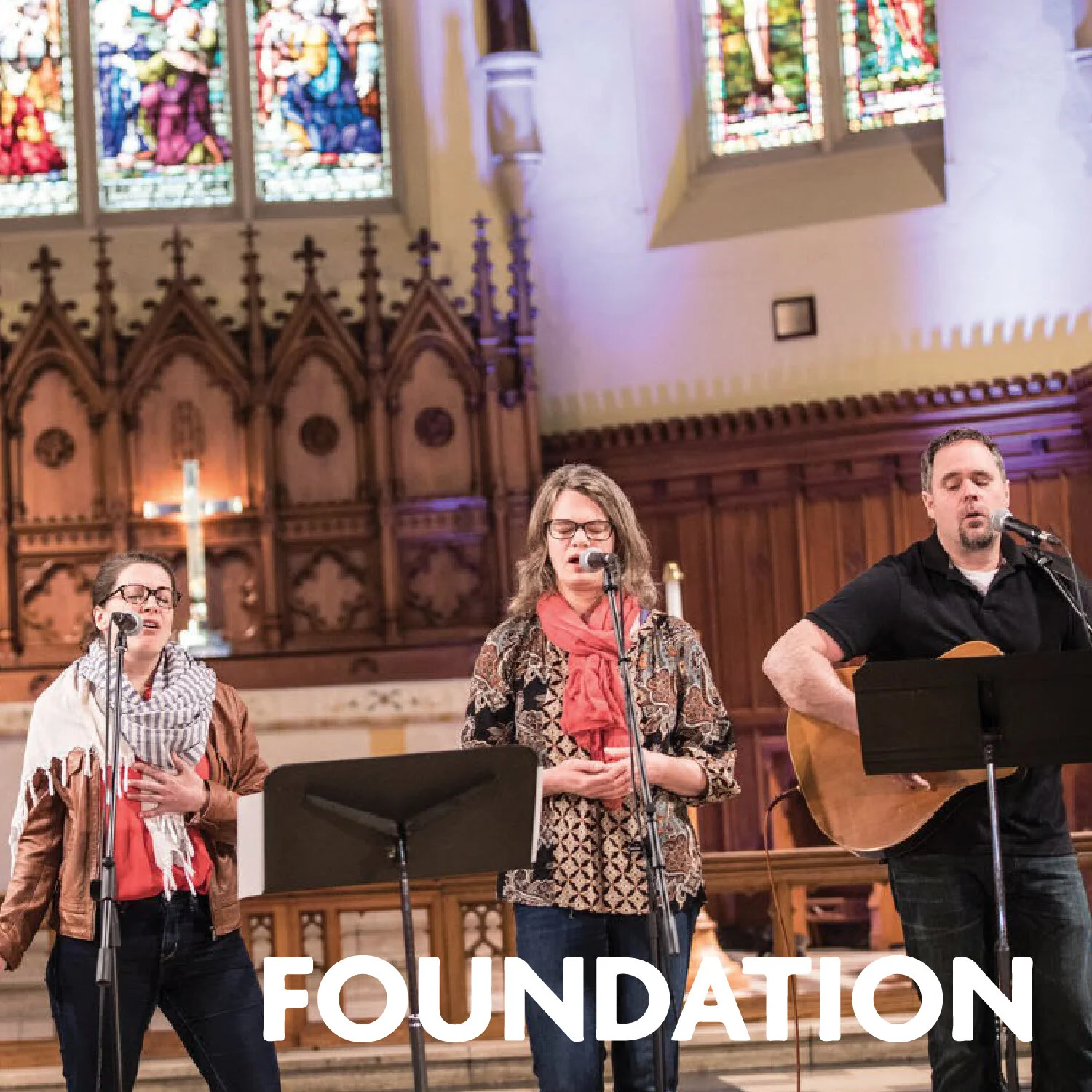
Today’s crisis around the church, residential schools and so many of Canada’s historic institutions presents both a challenge and opportunity for Canada’s granting foundations and charities.
For many Canadians, the church feels dangerous these days — even, toxic. A much needed conversation including Black Lives Matter, Me Too and the horrors of Residential Schools has been set on fire by the shocking discovery of the unmarked graves of beautiful, precious souls. Souls that deserve recognition in this life — and the next.

There are those that fall into ruin, those that are sold to the highest bidder, those few that still welcome their faithful, and then those that are burning these days. For every church that is reinvented, a dozen are demolished. Yet, in addition to being an important part of our heritage, our churches are above all a vast network of infrastructures at the service of their communities, located in the heart of each Quebec village. What if, in order to reshape Quebec, we made them an engine of economic and social development for our communities?

There are seemingly not enough social impact investment opportunities to quench investor appetite in Canada.
If we remove the opportunities to invest in green energy, and instead analyze opportunities to invest in communities, we see very little by way of investment. Considering this state of the social impact investment landscape, how can investors intent on having an impact, fund opportunities that create lasting social change while generating a fair return?


Le hasard de la météo a voulu que les Autochtones de Montréal célèbrent leur journée nationale dans une église, comme un pied de nez à cette institution qui les a empêchés pendant si longtemps de vivre leur culture et de l’exprimer.

We face a parallel national challenge: how to “build back better” in the wake of a crippling pandemic that has exposed the myths of a Canadian society free of systemic racism and baked-in social inequality.

Here in the capital of closed churches in Quebec, a pastor has helped turn St Jax into a community centre, a place to explore faith — and a home for a circus.